Custom Apparel
Next Level 3600 vs. 6210 for company shirts
Choosing between Next Level 3600 cotton and 6210 CVC shirts? Compare the fabric, sample fit and finished print before approving an order for your team.
What are the key differences between the Next Level 3600 and 6210 shirts?
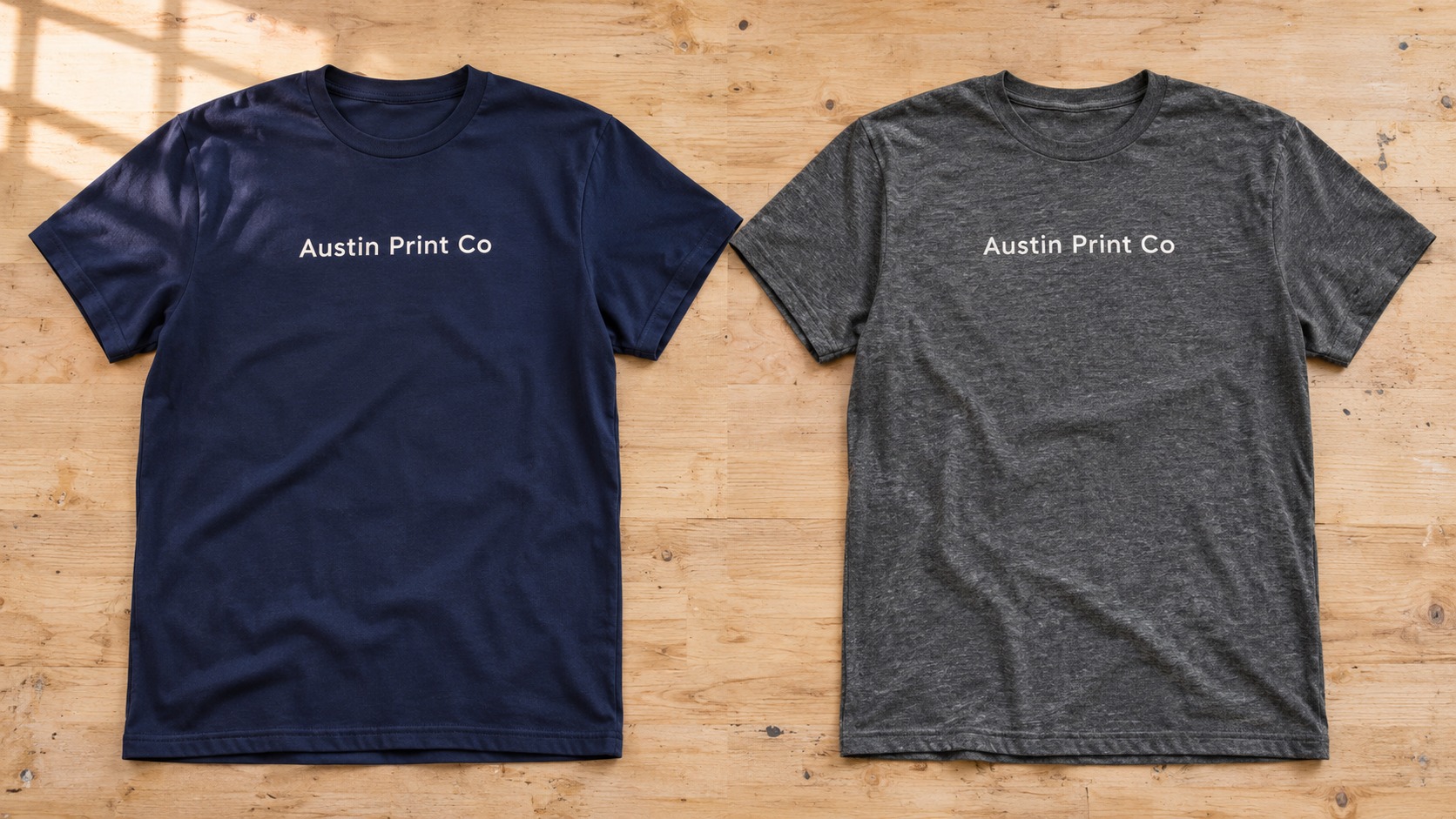
The Next Level 3600 is primarily a cotton tee; the 6210 is a cotton-polyester blend, with both listed at 4.3 ounces and a regular fit. For a company order, compare samples in the colors you actually want, then quote the same artwork on each before choosing.
An office shirt order can get stuck on a surprisingly small question: "Which one feels better?" A photo won't settle that. Nor will a coworker who owns a Next Level shirt but can't find the style number.
I'd put both samples on the table. Let the people who will wear them have a say, especially if these are staff shirts rather than giveaways. You may find that everyone agrees on the fabric and nobody agrees on the color.
Start with fabric, not a price for an unprinted shirt
Next Level's 3600 specification lists combed ring-spun cotton, with Heather Gray specifically listed as 90% cotton and 10% polyester. Check the exact color when all-cotton fabric matters to your order.
The 6210 specification lists 60% combed ring-spun cotton and 40% polyester. It is a CVC shirt, not a tri-blend. Both product pages call the shirts lightweight and list the same fabric weight, so buying the 6210 is not a move up to a heavier tee.
My starting point would be the 3600 when the buyer specifically wants a cotton shirt. I'd add the 6210 sample when the team is open to a blend or likes a heathered color. Neither choice earns a blanket "premium" label just because it costs more on one quote.
Ask for the finished price. Keep quantity, sizes, print dimensions and delivery requirements identical when comparing the two. Otherwise you're comparing different orders, and the cheaper blank may tell you very little about the bill.
Collect sizes after people have seen the sample
The manufacturer's fit guide says the 3600 and 6210 share a cut and size chart. That helps if you're moving an existing order between them, but it doesn't tell you whether your staff want a closer or looser shirt.
For a first order, offer a sample try-on and send the style-specific measurements with the size form. Someone's usual medium is a useful starting point, not a purchase instruction. Let each person make the final choice.
I'd also wash a sample according to its label before committing to an ongoing uniform program. The manufacturer's guide describes less shrinkage for the blend than for straight cotton; it does not give your particular decorated shirt a no-shrink guarantee. Keep the finished sample so a later reorder has something physical to match.
Decide how much of the shirt the logo should cover
Picture a hypothetical order for an Austin office: a small company mark for everyday wear, plus a large back graphic for a volunteer day. Those are two different print decisions even if every shirt comes from the same box.
Ask to see the artwork at its proposed size on the garment. A small logo proof needs to show whether the words remain readable. A big back print needs a conversation about how much printed area people want against their backs. Choosing a soft blank and then covering most of it is worth thinking through before approval.
At Austin Print Co, DTF printing is handled in-house; screen printing is outsourced. Ask us to compare the methods against your actual quantity and design, including the selected fabric and color, rather than assigning one method to every 3600 or 6210 order.
For either option, request confirmation of decoration compatibility before buying blanks yourself. If embroidery is the requirement, ask for a garment and stitch review instead of assuming a design approved for a polo belongs unchanged on a lightweight tee.
Put the handout date on the quote request
"For our meeting" leaves too much unanswered. Include the date the shirts must be in your hands, the delivery location and whether someone needs time to pack them into employee kits.
Before approving, get confirmation of the selected colors and size quantities. A style being listed online isn't confirmation that the whole order is available. If a substitute becomes necessary, ask to review it; another navy shirt is not automatically the same fabric or fit.
For a recurring company apparel program, decide whether to hold a few extras for new hires or reorder as people join. Quote those alternatives rather than buying a large surplus solely to chase a lower unit price.
Rush production depends on the product, quantity, artwork approval, stock and production availability. A quick quote is not a promise that a specific Next Level size run can be decorated tomorrow.
Questions buyers ask about Next Level shirts
Is next level 3600 good?
It is worth sampling when you want a lightweight cotton company tee, but the right choice still depends on the exact color, fit and finished decoration.
Does Next Level 6210 shrink?
Next Level describes less shrinkage for the 6210 blend than for straight cotton, but you should follow the garment care label and test a sample rather than assume zero shrinkage.
Do the Next Level 6210 and 3600 fit the same?
The manufacturer says they share a cut and size chart, though a sample is still the best way to confirm your team's preferred fit.
Is next level better than Gildan?
Compare specific styles against the same order requirements rather than treating either brand as universally better.
Request a custom quote with the 3600 or 6210, preferred colors, size breakdown, artwork and in-hand date; if you're undecided, ask for both options with the same decoration.
Need custom branded merchandise for your Austin team?
Request a quote from Austin Print Co — embroidery, screen printing, DTF, promotional products, and onboarding kits.
Request a quote